ASCM Certified Supply Chain Professional (CSCP) Career ROI
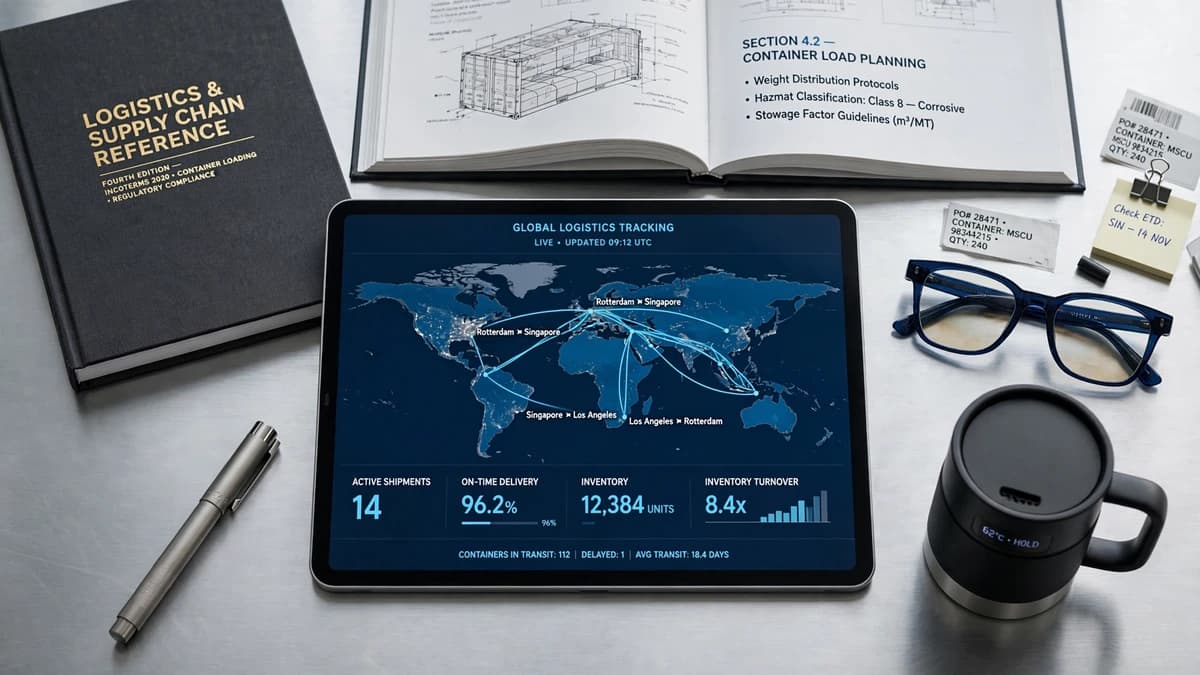
Global supply chains have never been more scrutinized, complex, or heavily relied upon. In an era of constant geopolitical shifts, raw material shortages, and rapid technological advancement, organizations can no longer afford fractured, siloed logistics. They require leaders who understand the end-to-end flow of goods, from the sourcing of raw materials to the final delivery to the end consumer.
The Association for Supply Chain Management (ASCM) Certified Supply Chain Professional (CSCP) credential—formerly branded under APICS—is the undisputed global gold standard for demonstrating this overarching, strategic competency. It moves beyond granular warehouse management and tests your ability to design, optimize, and protect a multi-national supply chain network.
Exam Architecture & Logistics
The CSCP is an elite credential, and the exam format is designed to rigorously evaluate your strategic decision-making capabilities rather than mere vocabulary recall.
- Question Format: The exam consists of 150 multiple-choice questions.
- Scored vs. Unscored: Of those 150 questions, 130 are actively scored. The remaining 20 are unscored "pretest" items distributed randomly throughout the test to evaluate their validity for future exams.
- Time Limit: Candidates are allotted 3.5 hours (210 minutes) to complete the exam.
- Scoring Scale: The exam utilizes a scaled scoring system ranging from 200 to 350.
- Passing Threshold: You must achieve a minimum scaled score of 300 to pass. Because the difficulty of different exam forms varies, there is no exact percentage of correct answers that guarantees a 300; you must simply meet the scaled proficiency threshold.
Before you can sit for the exam, you must meet the eligibility requirements, which generally include three years of related business experience or a bachelor's degree.
Deconstructing the 8 Core Modules
Unlike the CPIM (which focuses heavily on internal production and inventory management), the CSCP looks outward. The exam content is broken down into eight distinct modules:
- Supply Chains, Demand Management, and Forecasting: Understanding the foundational design of a supply chain and how to utilize statistical models to accurately forecast customer demand.
- Global Supply Chain Networks: Designing physical networks, selecting facility locations, and navigating the complexities of international trade and customs.
- Sourcing Products and Services: Strategic procurement, supplier selection, and managing the supplier lifecycle to ensure quality and compliance.
- Internal Operations and Inventory: Aligning manufacturing processes with inventory policies (e.g., Lean, Six Sigma) to balance holding costs with customer service levels.
- Forward and Reverse Logistics: Managing transportation modes, warehousing strategies, and the efficient return of goods (circular economy).
- Supply Chain Relationships: Managing customer and supplier relationships using CRM and SRM frameworks to build collaborative, long-term partnerships.
- Supply Chain Risk: Identifying vulnerabilities, assessing probability and impact, and designing robust mitigation and resilience strategies.
- Optimization, Sustainability, and Technology: Leveraging advanced technologies (ERP, IoT, Blockchain) and adhering to ESG (Environmental, Social, and Governance) principles.
Career ROI and Salary Expectations
The financial and professional return on investment for the CSCP is exceptionally strong. Because employers actively seek out the validated expertise that ASCM certifications provide, credential holders consistently out-earn their uncertified peers.
According to ASCM salary data, professionals holding an APICS certification enjoy a median salary increase of roughly 20% compared to those without the designation. For those specifically holding the CSCP credential, the median salary frequently tracks at approximately $114,500, compared to $86,000 for uncertified professionals.
The certification is highly sought after for roles such as:
- Supply Chain Manager / Director
- Senior Inventory Planner
- Logistics Analyst
- Global Sourcing Manager
Maintaining the Credential
The CSCP is not a lifetime credential. To ensure that certified professionals remain current with evolving industry technologies and practices, ASCM requires certification maintenance. You must earn and submit 75 Professional Development points (PDPs) every five years to keep your credential active. These points can be acquired through continued education, attending industry conferences, or participating in professional supply chain associations.
Achieving the CSCP certification proves that you are not just a participant in the supply chain, but a master architect of it. By passing this rigorous exam, you position yourself as an indispensable asset capable of driving global efficiency and enterprise profitability.
Ready to test your knowledge?
Browse our full catalog of expert-crafted practice exams.