ASE Master Automobile Technician (A1-A8) Testing Roadmap
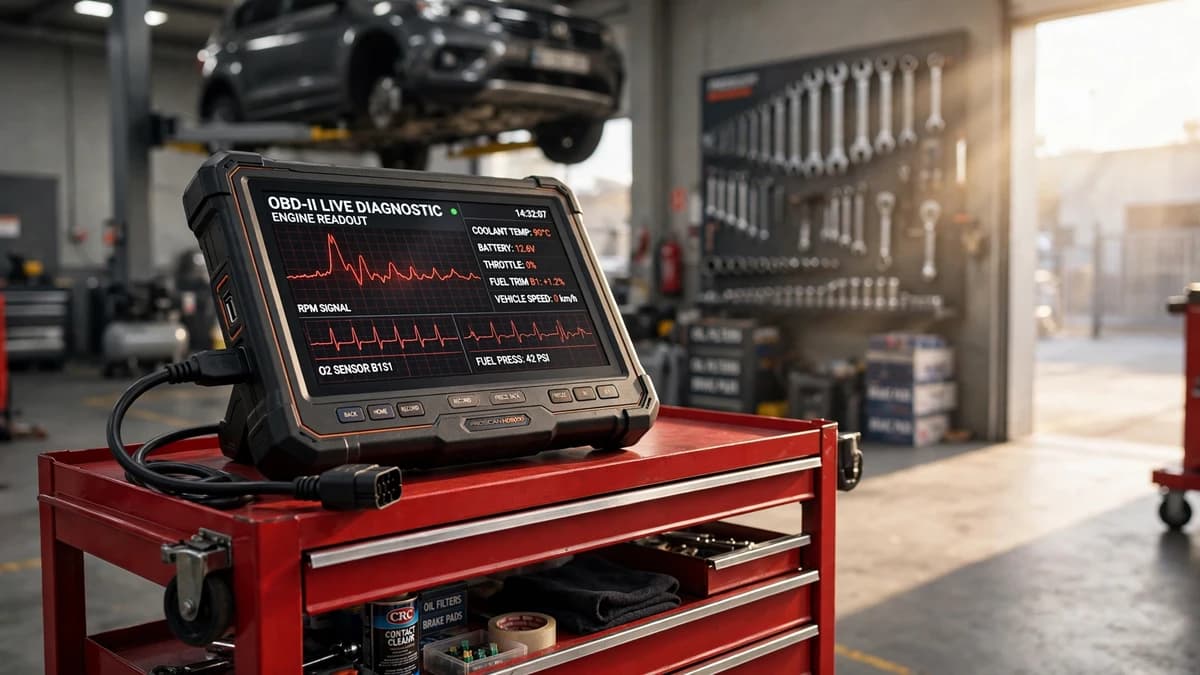
The automotive repair industry has evolved rapidly from mechanical wrench-turning to highly complex electrical engineering and computerized diagnostics. The National Institute for Automotive Service Excellence (ASE) provides the definitive benchmark for evaluating a technician's competence. Earning a single ASE certification proves you are a skilled professional in a specific system, but the ultimate pinnacle of the profession is the ASE Master Automobile Technician status.
To achieve Master status, you must pass all eight exams in the Automobile & Light Truck certification series (A1 through A8). Additionally, you must provide documented proof of at least two years of relevant, hands-on work experience (or a combination of formal automotive training and one year of on-the-job experience). This guide breaks down the architecture of the computer-based exams and details the specific diagnostic expectations for each of the eight systems.
Exam Architecture & Logistics
The ASE A-Series exams are computer-based tests administered strictly at Prometric test centers. They are designed to measure your knowledge of specific automotive systems, primarily focusing on diagnostic scenarios and repair procedures.
- Test Format: The exams utilize multiple-choice questions, which frequently feature situational "Tech A / Tech B" formats (e.g., "Tech A says the issue is X; Tech B says the issue is Y. Who is correct?").
- Question Count & Research Items: Each test typically contains between 50 and 60 total questions. Exactly 10 of these questions are unscored "research" questions used for future test development. Because they are mixed in with the live questions, you must answer every question as if it is scored.
- Time Limits: You are generally given 60 to 90 minutes per exam.
- Tests A3 and A4 allow 60 minutes.
- Tests A1, A2, A5, A7, and A8 allow 75 minutes.
- Test A6 (Electrical) allows 90 minutes.
- Passing Score: You typically need to answer around 34 questions correctly out of the scored pool (which varies depending on the specific exam's difficulty scaling) to pass.
Deconstructing the A1-A8 Series
To become a Master Technician, you must systematically conquer all eight domains.
A1: Engine Repair
This exam tests your ability to diagnose mechanical engine conditions and perform internal engine repairs. You will be tested on interpreting compression and cylinder leak-down test results. Expect questions on cylinder head and valve train diagnosis, engine block repair, and resolving lubrication or cooling system failures.
A2: Automatic Transmission / Transaxle
This section focuses on diagnosing automatic transmission concerns and executing internal repairs. You must understand planetary gearsets, hydraulic principles, and electronic transmission controls. Expect scenarios involving harsh shifting caused by faulty accumulators or check balls, as well as procedures for accurately checking hot fluid levels.
A3: Manual Drive Train and Axles
You will be evaluated on your ability to diagnose and repair manual transmissions, clutches, drive shafts, universal joints, and drive axles. This includes understanding differential ring and pinion backlash adjustments, identifying the causes of clutch slippage or chatter, and diagnosing four-wheel-drive (4WD) transfer case issues.
A4: Suspension and Steering
This domain evaluates your knowledge of chassis geometry and alignment. You must diagnose steering pull and wander, interpret tire wear patterns (e.g., cupping vs. feathering), and understand camber, caster, and toe adjustments. Expect questions on the repair and replacement of shocks, struts, ball joints, and electronic steering systems.
A5: Brakes
Safety is paramount in this section. You must diagnose hydraulic system faults, identify the causes of pedal pulsation or fading, and evaluate rotor, drum, and friction material wear. The exam heavily features anti-lock braking system (ABS) diagnostics, electronic stability control, and the correct procedures for bleeding complex hydraulic circuits.
A6: Electrical / Electronic Systems
Considered by many to be the most challenging test, A6 requires you to diagnose complex electrical faults using multimeters and test lights. You must be able to interpret intricate wiring diagrams, calculate voltage drops, and identify sensor, module, and CAN bus network issues. Troubleshooting starting and charging system failures is also heavily tested.
A7: Heating and Air Conditioning
This test focuses on HVAC performance and cabin comfort. You must interpret manifold gauge pressures and temperature split readings to diagnose issues like undercharged systems or restricted expansion valves. Expect questions on identifying refrigerant leaks, evaluating compressor clutches, and fixing complex electronic airflow distribution problems.
A8: Engine Performance
This exam evaluates your mastery of drivability and emissions. You must interpret OBD-II scan data, fuel trim numbers, and sensor waveforms. The test covers the diagnosis of fuel injection, ignition systems, positive crankcase ventilation (PCV), exhaust gas recirculation (EGR), and catalytic converter efficiency.
Study Strategies for ASE Success
- Pace by Exam, Not the Series: Do not try to take all eight tests in a single day. The mental fatigue will cause your scores to plummet. Schedule the exams in blocks of two or three per testing window, grouping related subjects (e.g., taking A1 Engine Repair and A8 Engine Performance together).
- Verify the Customer Complaint: ASE questions follow strict diagnostic logic. When a scenario asks for the "first step" in a diagnostic procedure, the answer is almost always to verify the customer complaint or duplicate the condition before tearing down the system.
- Understand the "Tech A / Tech B" Logic: In these questions, evaluate Tech A's statement entirely independently of Tech B. Treat them as two separate True/False questions. Only after deciding if each statement is individually true or false should you look at the multiple-choice options.
Securing the ASE Master Automobile Technician certification demonstrates that you possess a comprehensive, elite understanding of the entire vehicle ecosystem. By systematically mastering these eight core domains, you will elevate your career, increase your earning potential, and establish yourself as an undisputed expert in the automotive repair industry.
Ready to test your knowledge?
Browse our full catalog of expert-crafted practice exams.