NASM Certified Personal Trainer (CPT) 7th Edition Preparation
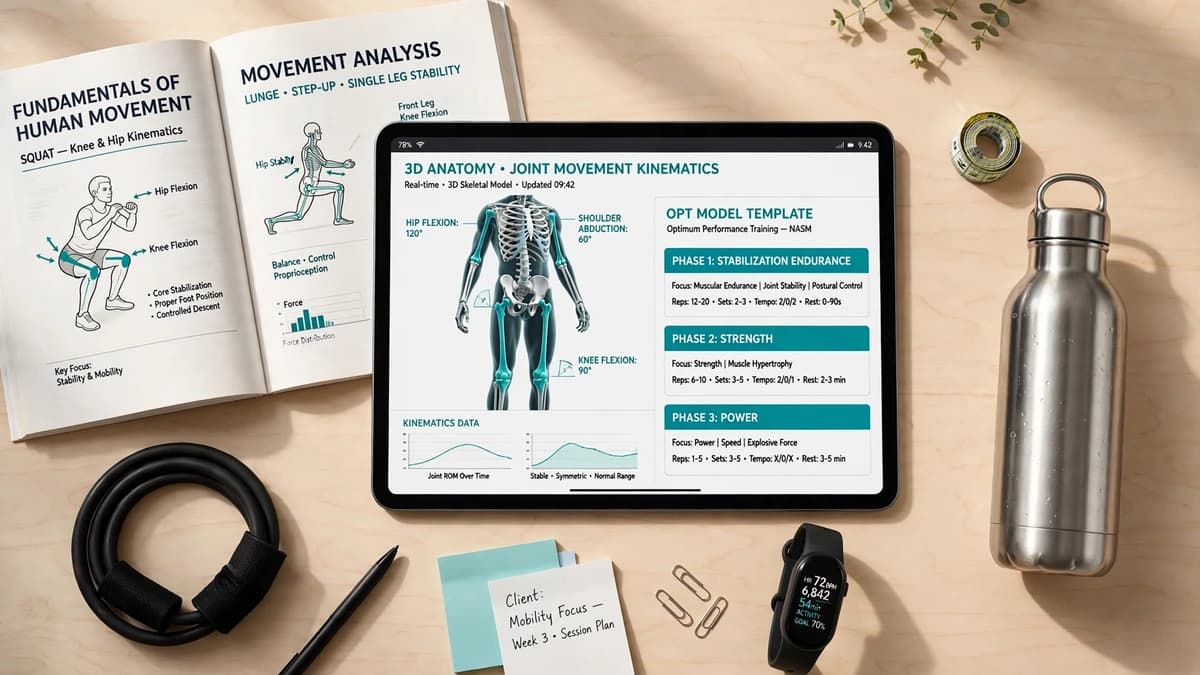
The National Academy of Sports Medicine (NASM) Certified Personal Trainer (CPT) credential is one of the most widely recognized and respected qualifications in the health and fitness industry. Grounded in evidence-based science, the NASM methodology shifts personal training away from guesswork and trends toward a systematic, individualized approach to human movement and performance.
The 7th Edition curriculum emphasizes the Optimum Performance Training (OPT) model, a systematic, science-backed framework designed to help clients achieve any fitness goal—whether it is weight loss, muscular hypertrophy, or athletic performance—while minimizing the risk of injury. This guide breaks down the exam architecture, core domains, and strategic study approaches required to pass the proctored exam.
Exam Architecture & Logistics
The NASM-CPT exam is a comprehensive computer-based proctored test designed to evaluate your practical application of exercise science and program design principles.
- Total Questions: The exam consists of 120 multiple-choice questions. Of these, 20 are unscored research questions, leaving 100 scored items.
- Time Limit: Candidates are allotted 120 minutes (2 hours) to complete the examination.
- Passing Score: You must achieve a scaled score of 70 or higher to pass (graded on a scale of 0 to 100).
- Proctoring Options: You can take the exam either online via remote proctoring or in person at an official PSI testing center.
Evaluate your readiness with our free NASM-CPT diagnostic exam on CertFactory
Deconstructing the 6 Core Domains
The exam is divided into six distinct domains, reflecting the multidisciplinary nature of modern personal training.
1. Basic and Applied Sciences (17%)
This domain covers the foundational biology and kinesiology of the human body.
- Anatomy & Physiology: Understanding the nervous, skeletal, and muscular systems, and how they interact to produce movement.
- Cardiorespiratory & Energy Systems: Knowing how the body creates ATP through the ATP-PC, glycolytic, and oxidative energy systems during various intensities of exercise.
- Biomechanics: Mastering anatomical planes of motion (sagittal, frontal, transverse), joint motions (flexion, extension, abduction, adduction), and muscle actions (concentric, eccentric, isometric).
2. Assessment (15%)
Assessments establish a baseline for your client and help identify muscle imbalances.
- Subjective Assessment: Evaluating client lifestyle, occupation, medical history, and physical activity readiness (PAR-Q+).
- Objective Assessment: Performing body composition testing (skin-fold, bioelectrical impedance, circumference measurements) and cardiorespiratory assessments (YMCA 3-minute step test, Rockport walk test).
- Postural Assessments: Recognizing structural deviations using the NASM Kinetic Chain Checkpoints (foot/ankle, knee, LPHC, shoulders, and head/cervical spine). You must master identifying common distortions:
- Pronation Distortion Syndrome (flat feet, adducted/internally rotated knees).
- Lower Crossed Syndrome (anterior pelvic tilt, arched lower back).
- Upper Crossed Syndrome (rounded shoulders, forward head).
3. Exercise Technique and Training Instruction (24%)
This is the largest domain on the exam. It tests your ability to safely instruct exercises across all modalities.
- Flexibility Training: Understanding corrective, active, and dynamic stretching techniques, along with self-myofascial release (foam rolling).
- Resistance Training: Proper form, spotting techniques, and regressions/progressions for core, balance, plyometric, speed, agility, and resistance exercises.
- Cardiorespiratory Training: Designing stage-based cardio programs to improve aerobic and anaerobic efficiency.
4. Program Design (21%)
The heart of the NASM curriculum is the OPT model, which is divided into three levels and five phases:
- Level 1: Stabilization
- Phase 1: Stabilization Endurance Training (Focuses on high repetition, low loads, and unstable environments to build joint stability and neuromuscular control).
- Level 2: Strength
- Phase 2: Strength Endurance (Combines a strength exercise with a stabilization exercise in a superset).
- Phase 3: Muscular Development / Hypertrophy (Focuses on high volume and moderate-to-high loads to maximize muscle growth).
- Phase 4: Maximum Strength (Heavy loads, low repetitions, and full recovery to increase maximal force production).
- Level 3: Power
- Phase 5: Power (Combines a heavy strength exercise with a high-velocity explosive power exercise in a superset).
5. Client Relations and Behavioral Coaching (13%)
Training is as much about psychology as it is about physiology.
- Behavior Change: Understanding stages of change (Transtheoretical Model: Precontemplation, Contemplation, Preparation, Action, Maintenance).
- Communication: Practicing active listening, eliciting SMART goals, and utilizing open-ended questioning to build client adherence.
6. Professional Development and Responsibility (10%)
- Scope of Practice: Knowing the legal boundaries of a personal trainer (e.g., trainers prescribe exercise and give general nutritional guidance, but they do not diagnose medical conditions, treat injuries, or prescribe medical meal plans).
- Business Operations: Ethics, liability insurance, and continuing education requirements (CEUs) to maintain certification.
Strategic Exam Preparation
- Memorize the OPT Model Flow: You will face multiple scenario-based questions asking you to select the correct phase, repetition range, tempo, and rest period for a specific client profile. Create a master matrix chart for the five phases.
- Master the Kinetic Chain Deviations: When a question describes a client whose knees cave inward during a squat, you must instantly associate it with overactive adductors/soleus and underactive gluteus medius, and know which muscles to stretch versus strengthen.
- Focus on Client Scenarios: NASM rarely asks direct definition questions. Most questions are framed around a case study (e.g., "A 45-year-old sedentary client with lower crossed syndrome wants to improve core stability. Which exercise is most appropriate?"). Practice reading the constraints of the prompt carefully.
Earning your NASM-CPT credential proves that you possess a rigorous, scientific understanding of exercise programming and human movement. By mastering the OPT model, postural assessment protocols, and program design phases, you will step into the fitness industry equipped to change lives safely and effectively.
Ready to test your knowledge?
Browse our full catalog of expert-crafted practice exams.